Silver has been used as money and as a store of value for thousands of years. Now it is moving onto the blockchain. Tokenized silver, also known as blockchain silver or digital silver, is a new way to own, trade, and use silver without touching a physical bar or coin. This guide explains what tokenized silver is, how it works, its benefits and risks, and how it compares to physical silver, silver ETFs, and silver futures. We will also look at real projects, taxes, safety tips, and the future of this growing market.
1. What Is Tokenized Silver?
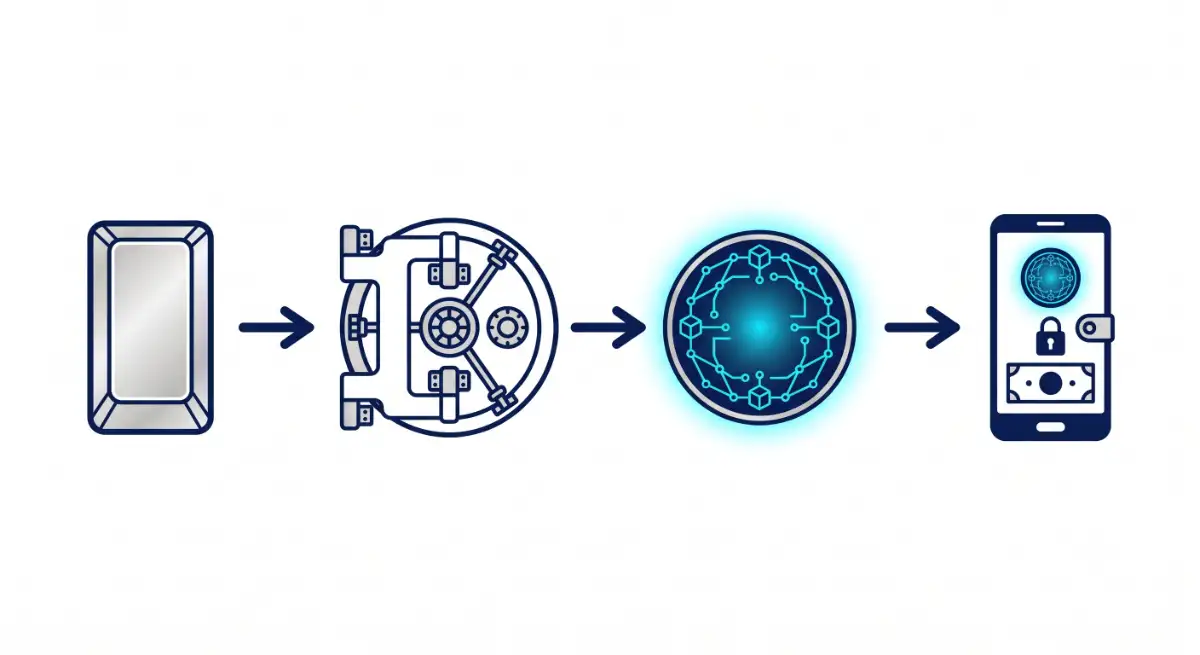
Simple definition: Tokenized silver is a digital token that represents a fixed amount of real, physical silver. Each token sits on a blockchain, and each one is meant to be backed by silver held in a secure vault. When you buy the token, you are buying a digital claim on real silver, not just a number on a screen.
Real-world example: Think of it like a warehouse receipt. In the old days, a merchant could store grain in a warehouse and get a paper receipt to prove ownership. That receipt could be bought, sold, or traded without moving the actual grain. Tokenized silver works the same way, but the receipt is a blockchain token instead of a piece of paper. For example, one token from a silver-backed token project may equal one troy ounce or one gram of silver sitting in an insured vault.
Why tokenization exists: Physical silver is heavy, costly to store, and slow to move. Silver tokenization solves these problems. It lets people buy small amounts of silver, trade it any time of day, and move it across the world in minutes. This is why silver on blockchain has become popular with both everyday investors and larger financial firms.
2. What Does “Tokenized” Mean?
Asset tokenization explained: Tokenization means turning ownership of a real asset into a digital token. The asset can be silver, gold, real estate, or even company shares. Instead of holding a paper title or a physical item, you hold a token that proves your ownership. This process is what people mean by silver tokenization when applied to precious metals.
Blockchain and digital ownership: A blockchain is a shared digital record book. It is kept on many computers at once, not just one company’s server. When a tokenized asset changes hands, the blockchain records who owns it now. This makes digital ownership of silver easy to check and hard to fake, since the record cannot be quietly changed by one party.
Real World Assets (RWAs): Tokenized silver belongs to a bigger group called Real World Assets, or RWAs. RWAs are physical or traditional financial items, such as gold, silver, property, bonds, and cash, that are represented as tokens on a blockchain. A silver RWA is simply a real world claim on silver that has been turned into a blockchain token so it is easier to trade and hold. Tokenized commodities like gold and silver are some of the most popular types of RWAs today.
3. How Tokenized Silver Works
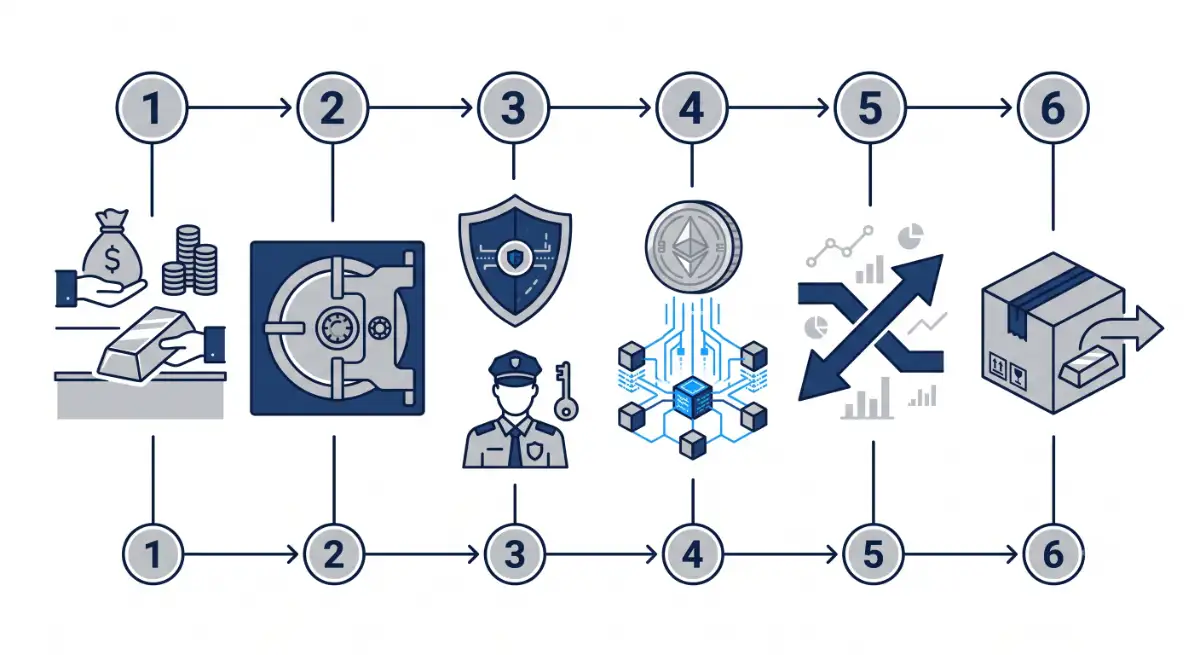
Tokenized silver follows a clear chain of steps from the mine to your digital wallet.
Physical silver purchase: The company or platform behind the token buys real silver bars or bullion from a refiner or bullion dealer. This silver must meet investment-grade purity standards, usually 99.9 percent pure or higher.
Vault storage: The silver is placed in a secure, insured vault. These vaults are often run by well-known bullion storage firms and are located in different countries for safety and legal reasons.
Custodian: A custodian is the company or trust that holds and protects the silver on behalf of token holders. The custodian is separate from the technology provider in many projects, which adds a layer of checks and balances.
Minting blockchain tokens: Once the silver is safely vaulted and verified, new tokens are created, or “minted,” on the blockchain. Each new token matches a specific amount of silver that has already been bought and stored. Reputable projects only mint tokens after the metal is in the vault, not before.
Buying and selling tokens: Investors can buy tokenized silver on the platform’s own website or on crypto exchanges that list the token. Once bought, tokens can be sent to a digital wallet and traded any time, day or night.
Redemption process: If a holder wants real metal instead of a digital token, they can request redemption. The token is sent back and burned (removed from supply), and the platform arranges to ship or release the matching physical silver, usually after identity checks and often subject to a minimum amount.
4. Is Tokenized Silver Backed by Real Silver?
This is the most important question for any new buyer, and reputable projects are built to answer it clearly.
1:1 backing: Most trusted tokenized silver projects claim a 1:1 backing model. This means one token always equals one fixed unit of silver, such as one troy ounce or one gram. No extra tokens should exist without matching metal in the vault.
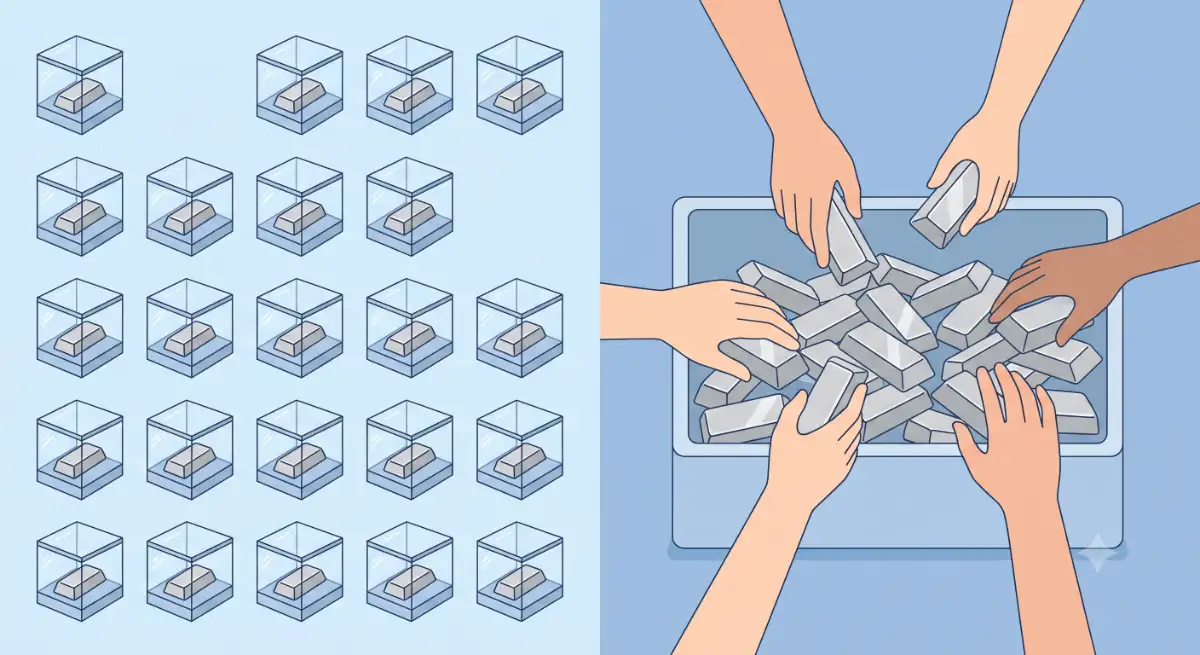
Allocated vs unallocated silver: This is a key detail. Allocated silver means specific bars or units are set aside and marked for you. They are not mixed with other people’s metal and are not lent out. Unallocated silver means you have a general claim on a pool of metal, but no specific bars are set aside for you. Allocated silver is safer because if the custodian runs into financial trouble, allocated metal is usually not counted as part of the company’s assets available to creditors.
Reserve audits: Trustworthy platforms hire independent, outside auditors to check the vaults on a regular basis, often twice a year. These auditors count and test the metal to confirm it matches the number of tokens in circulation.
Proof of reserves: Proof of reserves is a public report or on-chain record that shows the silver in the vault matches the tokens issued. Some platforms publish live dashboards, while others release audit reports on a set schedule. Always look for proof of reserves before trusting a physical silver token with your money.
Custody providers: The custodian matters as much as the blockchain technology. Look for custodians with a long history in precious metals storage, proper insurance, and clear, published legal agreements about who owns the metal.
5. How Blockchain Keeps Ownership Secure
Smart contracts: A smart contract is a small computer program stored on the blockchain. It automatically handles actions like minting new tokens when silver is deposited, or burning tokens when silver is redeemed. Because the rules are written in code, they run the same way every time, without a person needing to approve each step by hand.
Public ledger: Most blockchains used for tokenized precious metals are public, meaning anyone can look up token transfers and total supply. This openness helps build trust, since the community can check that the numbers make sense.
Wallet ownership: Your tokens are linked to a digital wallet, which is protected by a private key, a secret code known only to you. Whoever holds the private key controls the tokens. This is different from a bank account, where the bank controls access.
Token transfers: Sending tokenized silver to another person is as simple as sending an email. You enter their wallet address, confirm the transfer, and the blockchain updates ownership within minutes, without banks, wire transfers, or business hours getting in the way.
6. Types of Tokenized Silver
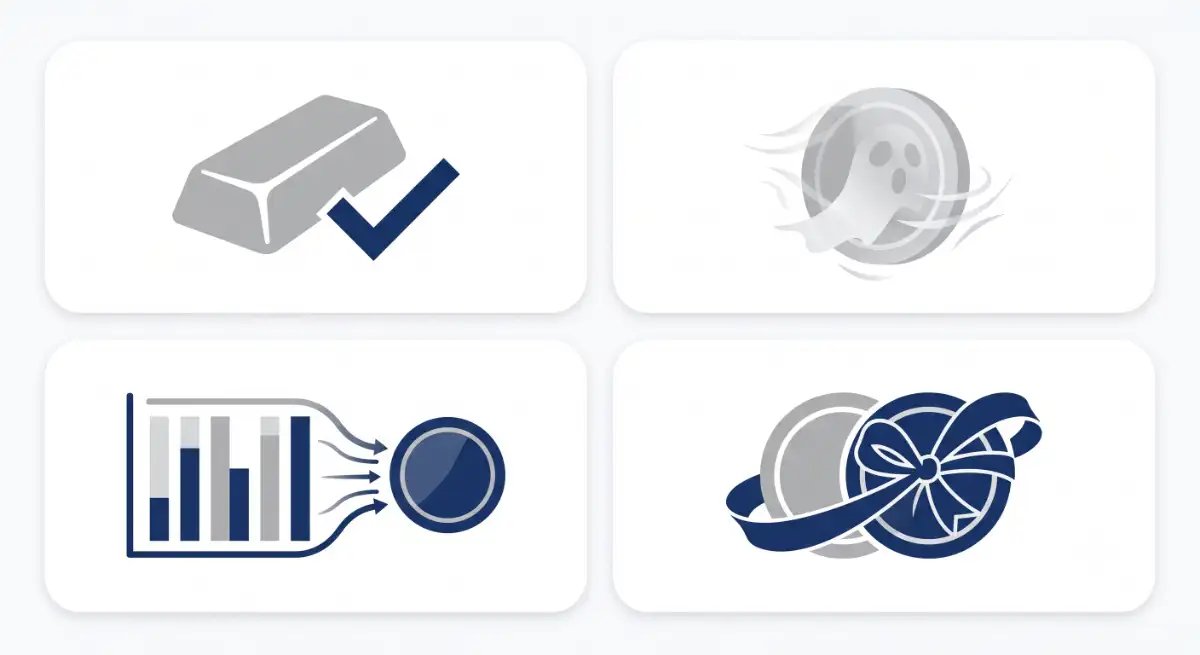
Not all blockchain precious metals projects work the same way, and silver tokens are no exception. Here are the main types found in the market today.
Fully backed silver tokens: These are tokens backed 1:1 by real, allocated silver sitting in a vault. This is the most common and most trusted model, used by most major silver-backed crypto projects.
Synthetic silver tokens: These tokens do not hold any real metal. Instead, they use smart contracts and price feeds (called oracles) to copy the price of silver. They behave like a bet on the silver price rather than true ownership, and they carry extra risk if the system that keeps the price in line breaks down.
Silver ETFs on blockchain: Some newer platforms are working to bring exposure to traditional, regulated silver ETFs onto the blockchain in token form. This is different from a fully backed silver token, since it depends on the rules and structure of the underlying ETF rather than direct, allocated metal ownership.
Wrapped silver assets: A wrapped token represents another silver token that has been moved to a different blockchain network. For example, a silver token first created on Ethereum might be “wrapped” so it can also be used on Polygon or another chain. The original token is locked, and a matching wrapped version is issued elsewhere.
7. Benefits of Tokenized Silver
- Fractional ownership: You can buy a small slice of silver, even less than a gram in some cases, instead of needing enough money for a full bar or coin.
- 24/7 trading: Unlike stock markets, blockchain networks never close. You can buy or sell tokenized silver on a weekend or in the middle of the night.
- Global accessibility: Anyone with an internet connection and a digital wallet can access silver tokenization, no matter where they live, as long as local law allows it.
- Lower storage costs: Buyers do not need a home safe or a bank locker. The vault and insurance costs are handled by the platform, often for a small fee or none at all.
- Fast settlement: Trades and transfers finish in minutes, compared to days for some traditional precious metal deals.
- Transparency: Public blockchains and published audits let buyers check that tokens are properly backed, which is harder to do with some traditional paper-based systems.
- Portfolio diversification: Silver often behaves differently from stocks and bonds, so adding tokenized silver can help spread out risk in a portfolio.
- DeFi compatibility: Fully backed silver tokens can often be used inside decentralized finance apps, such as lending platforms or liquidity pools, something physical bars cannot do.
8. Risks of Tokenized Silver
- Custodian risk: If the company storing the silver acts dishonestly, goes bankrupt, or loses the metal, token holders could be affected, especially if backing is unallocated or poorly documented.
- Smart contract risk: Bugs or weaknesses in the code behind a token could be used by hackers, leading to loss of funds.
- Regulatory risk: Laws around crypto backed by silver are still developing in many countries. A sudden rule change could affect how a token is bought, sold, or taxed.
- Liquidity risk: Some smaller tokenized silver projects have low trading volume, which can make it harder to sell quickly at a fair price.
- Counterparty risk: You are trusting the issuer and custodian to do what they promise. Weak contracts or unclear terms increase this risk.
- Redemption limitations: Many platforms only allow physical redemption above a certain minimum amount, so small holders may only ever be able to sell the token, not collect real metal.
- Market volatility: Silver prices themselves can swing sharply based on industrial demand, mining supply, and global economic events, and tokenized silver will move with those same price swings.
9. Tokenized Silver vs Physical Silver
| Feature | Tokenized Silver | Physical Silver |
|---|---|---|
| Storage | Handled by the vault or custodian | Buyer must store it safely (home safe, bank locker) |
| Minimum purchase | Often a fraction of a gram or ounce | Usually at least one small coin or bar |
| Trading hours | 24/7 on supported platforms | Limited to dealer hours |
| Portability | Instant digital transfer | Must be physically shipped or carried |
| Insurance | Usually included by the custodian | Buyer often arranges this separately |
| Proof of ownership | Blockchain token and wallet record | Physical possession or a paper receipt |
| Redemption | Possible, often with a minimum quantity | Already in physical form |
| Best for | Fast trading, small amounts, digital access | Direct control, no reliance on a third party |
10. Tokenized Silver vs Silver ETF
| Feature | Tokenized Silver | Silver ETF |
|---|---|---|
| Structure | Blockchain token, often claims allocated metal | Shares in a fund or trust that holds silver |
| Trading hours | 24/7 | Only during stock market hours |
| Settlement speed | Minutes | Typically one to two business days |
| Physical redemption | Sometimes possible for retail holders, with a minimum | Usually limited to large authorized institutions only |
| Access | Crypto wallet or exchange account | Brokerage account |
| Ongoing fees | Platform or network fees, varies by project | Annual expense ratio charged by the fund |
| Use in DeFi | Yes, in supported protocols | No |
| Regulatory maturity | Still developing in most countries | Well established and closely regulated |
11. Tokenized Silver vs Silver Futures
| Feature | Tokenized Silver | Silver Futures |
|---|---|---|
| What you own | A token backed by real, stored silver | A contract to buy or sell silver at a future date |
| Leverage | Generally none, 1:1 with metal | Often high leverage |
| Expiry date | None, can be held indefinitely | Contracts expire and must be closed or rolled over |
| Contract size | Small and flexible | Large standard size (for example, 5,000 troy ounces per COMEX contract) |
| Complexity | Simple to buy and hold | Requires a margin account and market experience |
| Main purpose | Long-term holding or store of value | Short-term trading, hedging, or speculation |
| Physical delivery | Possible, often with a modest minimum | Rare for individual traders, requires very large minimums |
| Extra risk | Custodian and technology risk | Leverage risk and margin calls |
12. Who Should Invest in Tokenized Silver?
Tokenized silver is a tool, and it may fit different people in different ways. This is general information, not personal advice, so always think about your own goals and risk tolerance, and speak with a financial advisor if you are unsure.
- Long-term investors: People who want silver as a store of value over many years may like the low storage hassle of a physical silver token.
- Crypto investors: Those already comfortable with wallets and exchanges may find tokenized silver an easy way to add a stable, real-world asset next to their other digital holdings.
- Precious metal investors: Buyers who already like gold and silver may use tokenized versions to trade more easily or avoid shipping and storage costs.
- Beginners: New investors can start with very small amounts, which lowers the barrier to entry compared to buying a full silver coin or bar.
- Institutions: Larger firms are increasingly exploring tokenized commodities for faster settlement, easier reporting, and new trading strategies, though this space is still maturing for big players.
13. Popular Tokenized Silver Projects
The section below describes real projects objectively, based on publicly available information. It is not a ranking and not a recommendation to buy any specific token. Always do your own research before using any platform.
Kinesis Silver (KAG): Kinesis Silver is a silver-backed token where each KAG generally represents one troy ounce of allocated silver bullion. It runs on its own blockchain, built as a fork of Stellar, and is also available as an ERC-20 token on Ethereum. The underlying metal is vaulted through the Allocated Bullion Exchange network and is audited by an independent third party roughly twice a year. Kinesis also offers a yield feature, where holders can earn a monthly reward funded by a share of the platform’s transaction fees, and a card product that lets users spend their silver holdings like everyday money.
Aurus tSILVER: Aurus tSILVER, also written as tXAG, is a token where each unit represents one gram of 99.9 percent pure, LBMA-accredited silver. Aurus uses a more decentralized model than some competitors. Rather than issuing all the silver itself, it works with a network of independent bullion refineries and dealers who mint tokens once metal is verified and stored. tSILVER tokens run on Ethereum and Polygon. Aurus also has an ecosystem token, AurusX, which can be staked for rewards linked to platform activity.
SilverToken (SLVT): SilverToken is one of the earlier silver-backed crypto projects, launched as an ERC-20 token in 2017. Each SilverToken is designed to represent a set amount of vaulted, investment-grade silver, historically one troy ounce, though the exact silver-to-token ratio is published and updated by the project over time. Holders can typically redeem tokens for physical silver or sell them back through a smart contract at a price tied to the live silver spot price.
Other emerging platforms: The market keeps growing beyond these three names. Smaller and newer projects, such as Lode, focus on very small denominations of tokenized silver aimed at everyday spending rather than large investment holdings. Because this is a fast-changing space, new entrants appear often, and older ones sometimes rebrand or shut down, so ongoing research is important no matter which platform you consider.
14. How to Buy Tokenized Silver
- Choose a platform: Compare the project’s backing model, audit history, fees, and supported countries before deciding where to buy tokenized silver.
- Create an account: Sign up on the platform’s website or app using your email and a strong password.
- Verify identity (if required): Most regulated platforms require KYC checks, which usually means uploading a government ID and sometimes a proof of address.
- Deposit funds: Add money through a bank transfer, card payment, or by sending an existing cryptocurrency or stablecoin, depending on what the platform accepts.
- Buy tokens: Place an order for the amount of silver you want. The platform will show you the current price plus any fees before you confirm.
- Store in wallet: Keep your tokens on the platform for easy trading, or move them to your own personal wallet for more control.
- Monitor holdings: Check your token balance and the project’s audit reports from time to time to confirm your silver on blockchain is still properly backed.
15. How to Store Tokenized Silver Safely
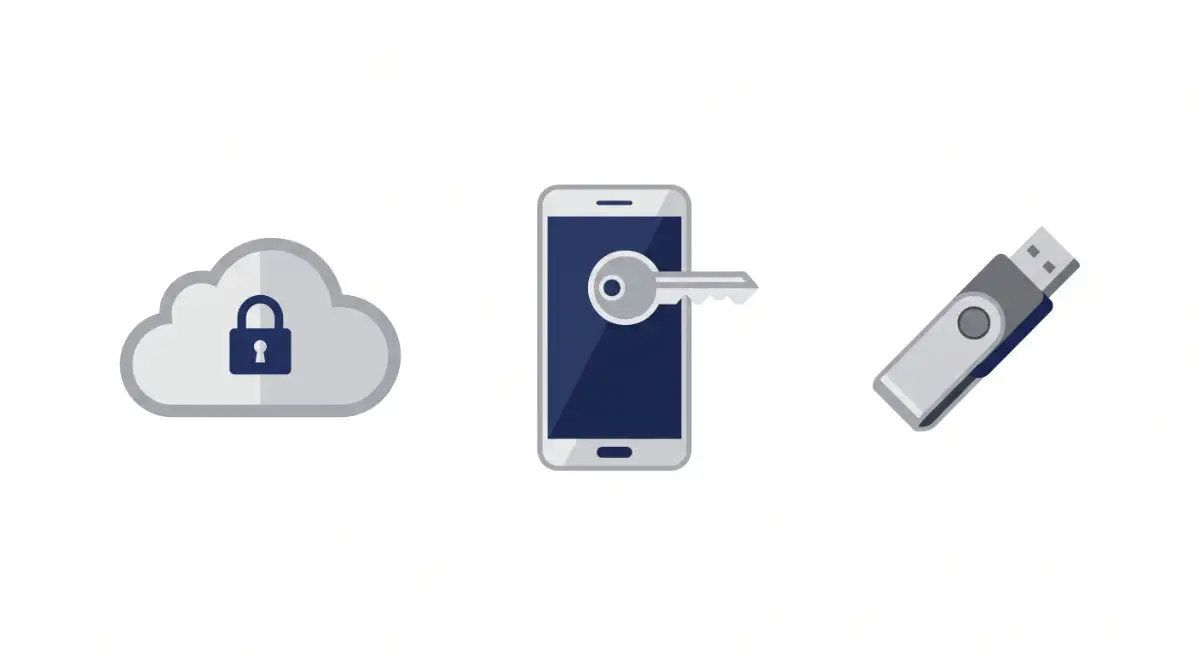
Custodial wallets: These are wallets managed by the platform or exchange on your behalf. They are simple to use since the company handles the technical security, but you are trusting them not to freeze or lose your access.
Non-custodial wallets: With these wallets, you personally hold the private keys, and no company can block your access. This gives more control but also more responsibility, since there is no customer support line if you lose your key.
Hardware wallets: These are small physical devices that store your private keys offline, away from internet-based hackers. They are considered one of the safer options for holding valuable digital assets long term.
Backup seed phrase: Most wallets give you a set of words, called a seed phrase, when you first set them up. This phrase can restore your wallet if your device is lost or broken. Write it down on paper and store it somewhere private and safe. Never store it as a photo on your phone or in an email.
Security tips: Turn on two-factor authentication wherever it is offered. Never share your seed phrase or private key with anyone, even someone claiming to be customer support. Double check wallet addresses before sending tokens, since blockchain transfers usually cannot be reversed.
16. Can You Redeem Tokenized Silver for Physical Silver?
Redemption requirements: Most platforms require identity verification and an active, verified account before allowing a redemption request.
Minimum redemption: Many projects set a minimum amount of silver you must hold before you can redeem for physical metal, since packing and shipping small amounts is not cost effective. This minimum varies widely between platforms, so check the specific project’s terms.
Shipping: Once approved, silver is usually shipped through an insured, tracked courier service. Some platforms also offer pickup from a partner vault instead of home delivery.
Fees: Redemption often comes with fees for handling, shipping, and insurance, which can vary based on the amount and your location.
Processing time: Redemption is not instant. It can take anywhere from a few days to a few weeks, depending on the platform, the vault location, and local customs rules if shipping internationally.
17. How Tokenized Silver Is Priced
Spot silver price: The base value of tokenized silver follows the global silver spot price, the price at which raw silver trades on major markets. As of mid-2026, silver has been trading in the range of roughly 58 to 59 US dollars per troy ounce, though this number changes constantly with the market.
Premiums: Some platforms charge a small premium over spot price when you buy, similar to how physical dealers charge a premium for coins and bars. Because tokenized silver skips a lot of physical handling, this premium is often lower than for coins.
Blockchain fees: When moving tokens between wallets, you may need to pay a small network fee, often called a gas fee, especially on busier blockchains like Ethereum. These fees change based on network traffic.
Supply and demand: On some exchanges, high buying or selling pressure can push a token’s price slightly away from the pure spot price. Because most fully backed tokens can be redeemed for real metal, this gap is usually kept small, as traders can profit by buying low and redeeming, which pushes the price back toward spot.
18. Tokenized Silver and DeFi
Lending: Some DeFi platforms let you lend your silver tokens to other users in exchange for interest, similar to earning interest on a savings account.
Borrowing: You can use tokenized silver as collateral to borrow stablecoins or other cryptocurrencies without selling your silver position.
Liquidity pools: Investors can pair silver tokens with a stablecoin in a liquidity pool, helping other traders swap between them, and earn a share of trading fees in return.
Collateral: Because silver tokens are simple to verify on-chain, they can be accepted as collateral inside various DeFi lending protocols.
Yield opportunities: Some platforms, including Kinesis, offer built-in yield programs, paying holders a portion of transaction fee revenue simply for holding or storing their tokens on the platform.
19. Regulations and Legal Considerations
KYC: Know Your Customer, or KYC, rules require platforms to verify a user’s identity before allowing full access to buying, selling, or redeeming. This helps prevent fraud and identity theft.
AML: Anti-Money Laundering, or AML, rules require platforms to monitor transactions for suspicious activity and report certain transactions to regulators.
Securities laws: Whether a tokenized silver product counts as a security depends on how it is structured and which country’s laws apply. Regulators in several countries, including the United States, have been working through 2026 to create clearer rules for digital assets, including joint guidance from securities and commodities regulators on how different token types should be classified.
Country-specific restrictions: Some countries restrict cryptocurrency purchases, limit precious metal ownership, or require special licenses for platforms offering these products. Always check your local laws before buying tokenized precious metals, since rules can be very different from one country to the next.
20. Tax Implications
Tax rules for tokenized silver vary by country, and this section is general information only, not personal tax advice. Always check with a qualified tax professional in your area.
Capital gains: In most countries, selling tokenized silver for more than you paid creates a taxable capital gain, while selling for less may create a deductible loss.
Precious metals taxation: In the United States, for example, physical precious metals and physically backed metal ETFs are generally treated as “collectibles” for tax purposes, which can mean a higher maximum long-term capital gains rate than ordinary stocks. Whether a specific tokenized silver product receives the same treatment can depend on its legal structure, and clear guidance for tokenized commodities is still developing in many places.
Crypto taxation: Because tokenized silver exists as a digital asset on a blockchain, some tax authorities may also apply digital asset reporting rules on top of precious metals rules. In the United States, the IRS treats digital assets as property and requires transactions to be reported.
Record keeping: Keep clear records of every purchase date, price, fee, and sale, since this information is needed to correctly calculate gains or losses at tax time. Good records also make it easier to respond if a tax authority ever asks questions.
21. Common Myths About Tokenized Silver
“It’s fake silver”: This is not accurate for reputable, fully backed projects. Real silver is bought and vaulted before tokens are minted, and audits are used to confirm the metal exists. The myth likely comes from confusing fully backed tokens with synthetic tokens, which do not hold real metal.
“You don’t own anything”: With allocated backing, you hold a specific digital claim on real silver, similar in spirit to a warehouse receipt. Your exact legal rights depend on the platform’s terms, so it is important to read them, but this is different from owning nothing at all.
“Blockchain creates silver”: Blockchain technology cannot create physical metal out of nothing. It only records ownership. Real silver must always be purchased and stored first, and tokens are simply the digital record of that existing metal.
“It’s the same as an ETF”: As shown in the comparison table earlier in this guide, tokenized silver and silver ETFs are structured very differently, with different trading hours, redemption rights, and fee models, even though both give exposure to the silver price.
22. Tips Before Investing
- Verify reserves: Look for clear, published information showing that tokens are backed by real, allocated silver.
- Read audits: Check whether an independent auditor reviews the vault regularly, and read the actual audit report if it is available.
- Check redemption policy: Understand the minimum amount needed to redeem physical silver and how long the process takes.
- Understand fees: Look closely at buying fees, selling fees, storage fees, and blockchain network fees before committing money.
- Research custodians: Learn who is physically holding the silver, where it is stored, and what insurance is in place.
- Diversify: Avoid putting all your money into a single token or platform, since spreading risk is a basic principle of sound investing.
23. The Future of Tokenized Silver
Growth of Real World Assets (RWAs): The wider tokenized real-world asset market has grown quickly. By mid-2026, the total on-chain value of tokenized RWAs reached around 32 billion US dollars, nearly triple the level from about a year earlier, based on industry tracking data. Silver is a small but growing slice of this larger trend.
Institutional adoption: Large financial firms and even traditional market infrastructure providers have been testing tokenization for stocks, funds, and commodities through 2026. This growing institutional interest tends to bring more structure, oversight, and trust to the wider tokenized commodities space, which can indirectly benefit silver tokenization as well.
Tokenized commodities: Within tokenized commodities, gold still makes up the large majority of value, with silver representing a smaller share. As blockchain commodities infrastructure matures, more issuers may expand their offerings to include silver alongside gold.
Integration with traditional finance: Banks, asset managers, and payment companies are increasingly exploring how tokenized assets can plug into existing financial systems, which could make buying tokenized silver feel as familiar as using a regular banking app in the future.
Potential challenges: Much of the broader tokenized asset market still faces a liquidity problem, meaning many tokenized assets are held but rarely traded. Regulatory rules also remain uneven across different countries. These are real hurdles that silver tokenization projects will need to work through as the industry matures.
24. Final Verdict: Is Tokenized Silver Worth It?
Tokenized silver offers real benefits: easier access, fractional ownership, round-the-clock trading, and lower storage hassle compared to physical bars and coins. For people who already trust digital wallets and want simple exposure to silver, it can be a useful tool.
At the same time, it is not free of risk. Custodian trust, smart contract security, patchy regulation, and sometimes thin trading volume are all real concerns that vary from platform to platform. Tokenized silver is also not identical to owning a coin in your hand or to owning shares in a regulated ETF, so it fits a different role for different people.
Whether tokenized silver is worth it depends on your own goals, how much you value convenience versus direct physical control, and how comfortable you are with the technology involved. This guide is for general education only and is not financial advice. Before investing, consider speaking with a licensed financial advisor and doing your own research into any specific platform.
Frequently Asked Questions
What is tokenized silver?
Tokenized silver is a digital token on a blockchain that represents ownership of a set amount of real, physical silver, usually stored in an insured vault.
Is tokenized silver backed by real physical silver?
Reputable fully backed tokenized silver projects are backed 1:1 by real, often allocated, silver held in a vault, confirmed through regular independent audits. Synthetic tokens, on the other hand, may only track the silver price without holding real metal, so it is important to check which type you are buying.
How does tokenized silver work?
A provider buys and vaults real silver, then mints blockchain tokens that match that amount of metal. Buyers can trade these tokens freely and, in many cases, redeem them later for physical silver.
Can I redeem tokenized silver for physical silver?
On many platforms, yes, though usually only above a set minimum amount, and after identity verification. Shipping and handling fees typically apply, and the process can take several days to a few weeks.
Is tokenized silver safe?
Safety depends heavily on the specific platform. Look for allocated backing, regular independent audits, published proof of reserves, and a trustworthy custodian. Like any digital asset, it also carries some smart contract and regulatory risk.
What is the difference between tokenized silver and physical silver?
Tokenized silver is a digital claim that is easy to trade and does not require personal storage, while physical silver is an item you hold yourself with no reliance on a blockchain or third-party platform.
Tokenized silver vs silver ETF: which is better?
Neither is universally better. Tokenized silver offers 24/7 trading and sometimes physical redemption for retail holders, while silver ETFs offer long-established regulation and easy access through normal brokerage accounts. The right choice depends on your priorities.
What are the risks of investing in tokenized silver?
Key risks include custodian risk, smart contract risk, regulatory uncertainty, limited liquidity on some platforms, counterparty risk, redemption limits, and normal silver price volatility.
Which blockchain is used for tokenized silver?
It varies by project. Some use their own blockchain, others issue tokens on Ethereum, and some use additional networks like Polygon for lower fees. Always check which blockchain a specific silver-backed token uses before buying.
Where can I buy tokenized silver?
You can typically buy tokenized silver directly from the issuing platform’s website or app, or from cryptocurrency exchanges that list the token, after completing any required identity verification.
Can beginners invest in tokenized silver?
Yes. Tokenized silver often allows very small purchase amounts, which can make it more approachable for beginners than buying a full physical coin or bar, though beginners should still take time to learn how wallets and redemption work.
Does tokenized silver follow the spot silver price?
Yes, fully backed tokenized silver is designed to track the global silver spot price closely, with only small differences caused by platform premiums or short-term supply and demand on exchanges.
Is tokenized silver taxable?
In most countries, yes. Selling tokenized silver for a profit is generally a taxable event, and it may be treated under precious metals tax rules, digital asset tax rules, or both, depending on your country. Check with a tax professional for guidance specific to your situation.
What are the best tokenized silver projects?
There is no single “best” project for everyone. Well-known names in the space include Kinesis Silver (KAG), Aurus tSILVER, and SilverToken (SLVT), each with different structures for backing, custody, and redemption. Compare their audits, fees, and redemption policies to see which fits your needs.
Disclaimer: This article is for educational and informational purposes only. It does not constitute financial, investment, tax, or legal advice. Tokenized silver, like all digital assets and precious metals investments, carries risk, including the potential loss of principal. Always do your own research and consult a licensed financial advisor before making investment decisions.